WMS & warehouse operations consulting
Warehouse
management,
unblocked.
Get the system and the operation working together.
Optichain helps 3PLs, fulfillment teams, and warehouse operators reduce travel time, fix broken workflows, prepare for launches, and build practical visibility around their WMS.
Tampa, Florida Serving warehouse teams across the U.S.
WMS migrations & selections
led or supported
Years across operations,
engineering & product
Amazon · Shopify · Flexport
The gap
Your WMS may be working.
Your operation may still be struggling.
The friction often sits between system rules and the way work actually moves through the warehouse.
Optichain reviews those connections: the decisions before launch, the workflows during the shift, and the visibility managers need to act.
Find the problem you recognizeAbout Optichain
Built from real
warehouse work.
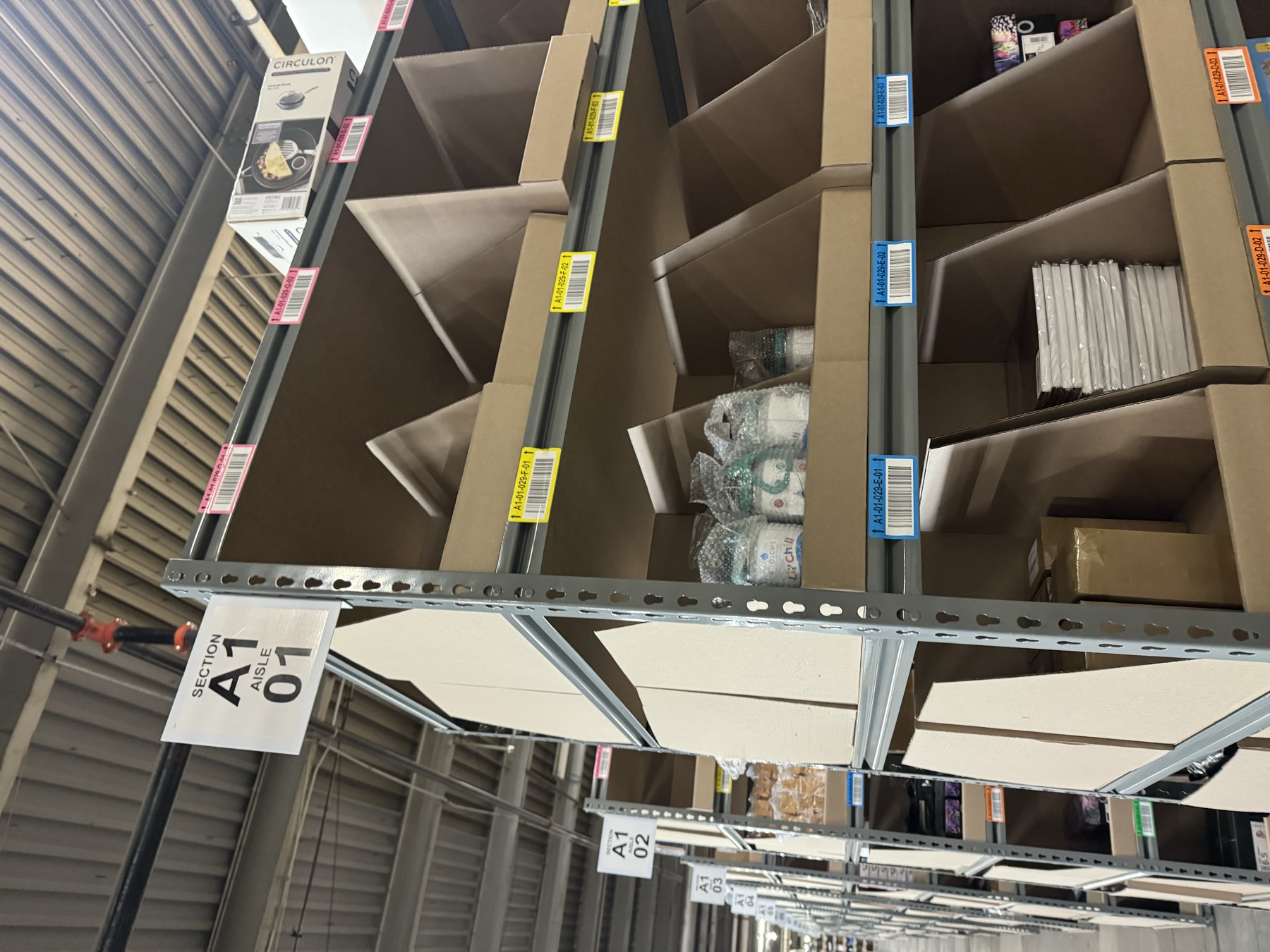

An operator's perspective.
Engineering and product depth.
Optichain is led by Alex Gibbs, a warehouse systems and operations leader with experience across operations, engineering, and product.
The work connects WMS workflows, fulfillment operations, integrations, launch readiness, dashboards, and process improvement. It starts with how the team gets the work done.
Vendor-agnostic, with deep experience in Logiwa-led migrations and exposure across Blue Yonder, Deposco, HighJump, Infor, Manhattan, ShipHero, and custom WMS environments.
Read the full storyWhere we help on the floor
Every zone has its own failure modes. Find yours.
Hover a zone to see the symptoms we look for there and where to start. On a phone, tap a zone.
Product flow, dock to dockNumbered zones follow the product. Diamonds mark support functions.
Product flow
Support
Across the building
Getting started
Ten business days.
A clearer next move.
Most first engagements move from workflow review to a practical plan over the first ten business days. We start with the operation as it runs today.
Start with a conversationTalk through the workflow, the systems, and the problem your team keeps working around.
- Days 1–2 / Review
Walk through the workflow.
Receiving, putaway, picking, packing, replenishment, returns, and exceptions, in the order they actually run.
OUTPUT / A shared view of the friction - Days 2–5 / Investigate
Connect the data to the floor.
Review WMS data, exception queues, reporting gaps, and the steps operators take to get the work done.
OUTPUT / Evidence behind the symptoms - Days 5–8 / Prioritize
Find the changes that matter.
Rank the issues affecting travel, accuracy, throughput, or launch stability by impact and feasibility.
OUTPUT / A focused priority list - Days 8–10 / Plan
Give the team a usable next step.
Define recommendations, deliverables, and implementation steps the operation can put to work.
OUTPUT / A practical next-step plan
Built for
3PLs, fulfillment networks, warehouse leaders, and teams preparing for WMS changes.
Built to be used
Workflow redesigns, operator SOPs, dashboards, UAT scenarios, training, and launch plans.
After the diagnosis
Design, implement, stabilize, and improve. Continue where the operation needs support.
Work in practice
Changes you can
see in the operation.

Reduce the travel
behind every pick.
$2.1M facility to $8.7M network annualized labor opportunity estimate.
Plan versus actual,
during the shift.
A practical view of labor, throughput, and progress while there's still time to respond.
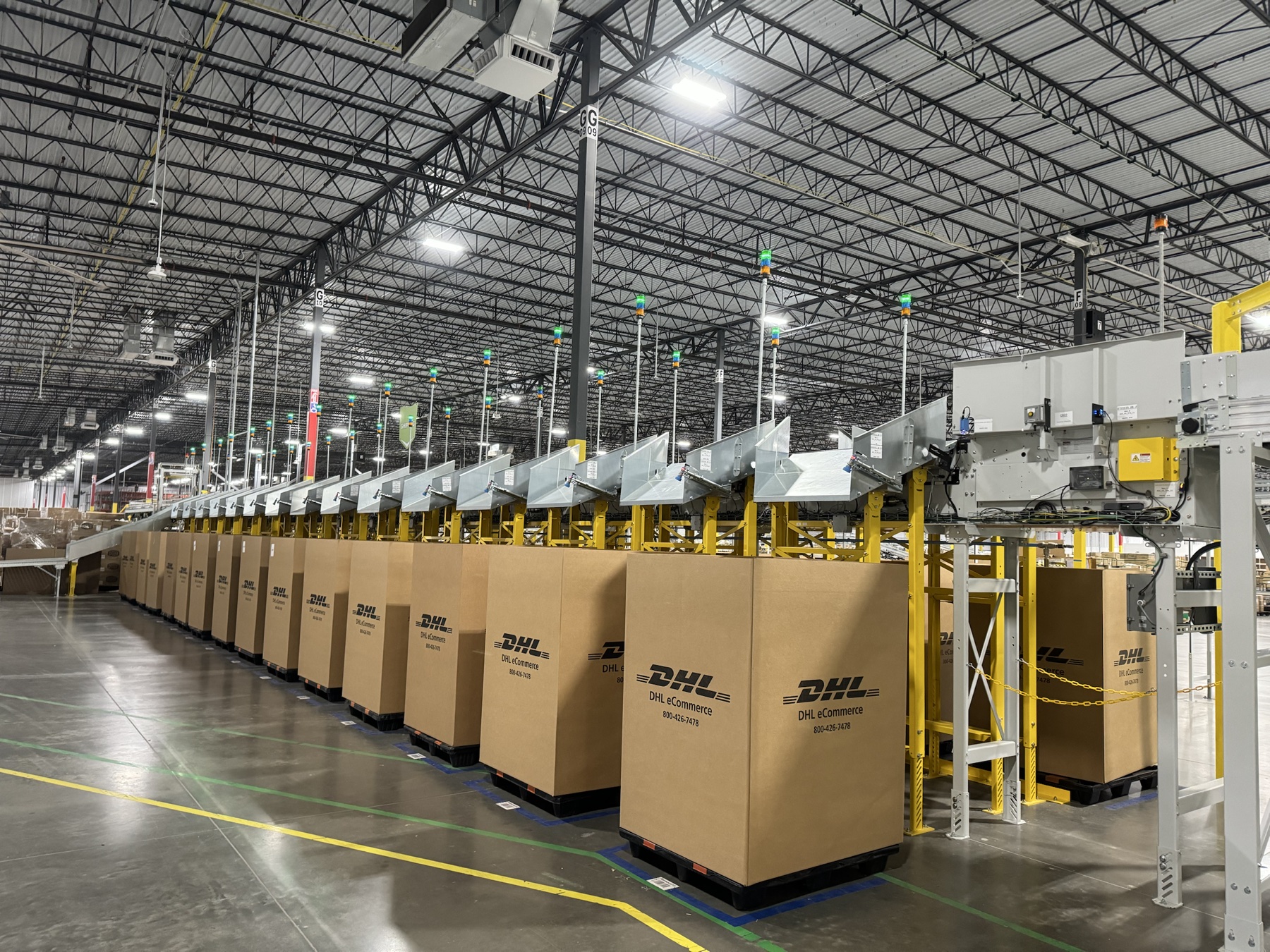
See the project WCS sorter integration2 monthsConnect the automation
to the operating model.
Completed integration; 12 manual sort roles removed from the operating model.
See the project
A practical path from
diagnosis to execution.
Five stages, run in order. Most engagements start at Assess and stop wherever the operation stops hurting.
Assess
Identify where WMS workflows, labor flow, exceptions, or visibility are breaking down.
Design
Translate operational pain into better workflows, SOPs, dashboards, and integration requirements.
Implement
Support practical rollout, stakeholder alignment, and execution planning.
Stabilize
Help teams manage post-change friction, issue ownership, and operating rhythm.
Improve
Build the review cadence needed to keep slotting, dashboards, ICQA, and workflows current.
Start with a worksheet
Put a name to
the execution gaps.
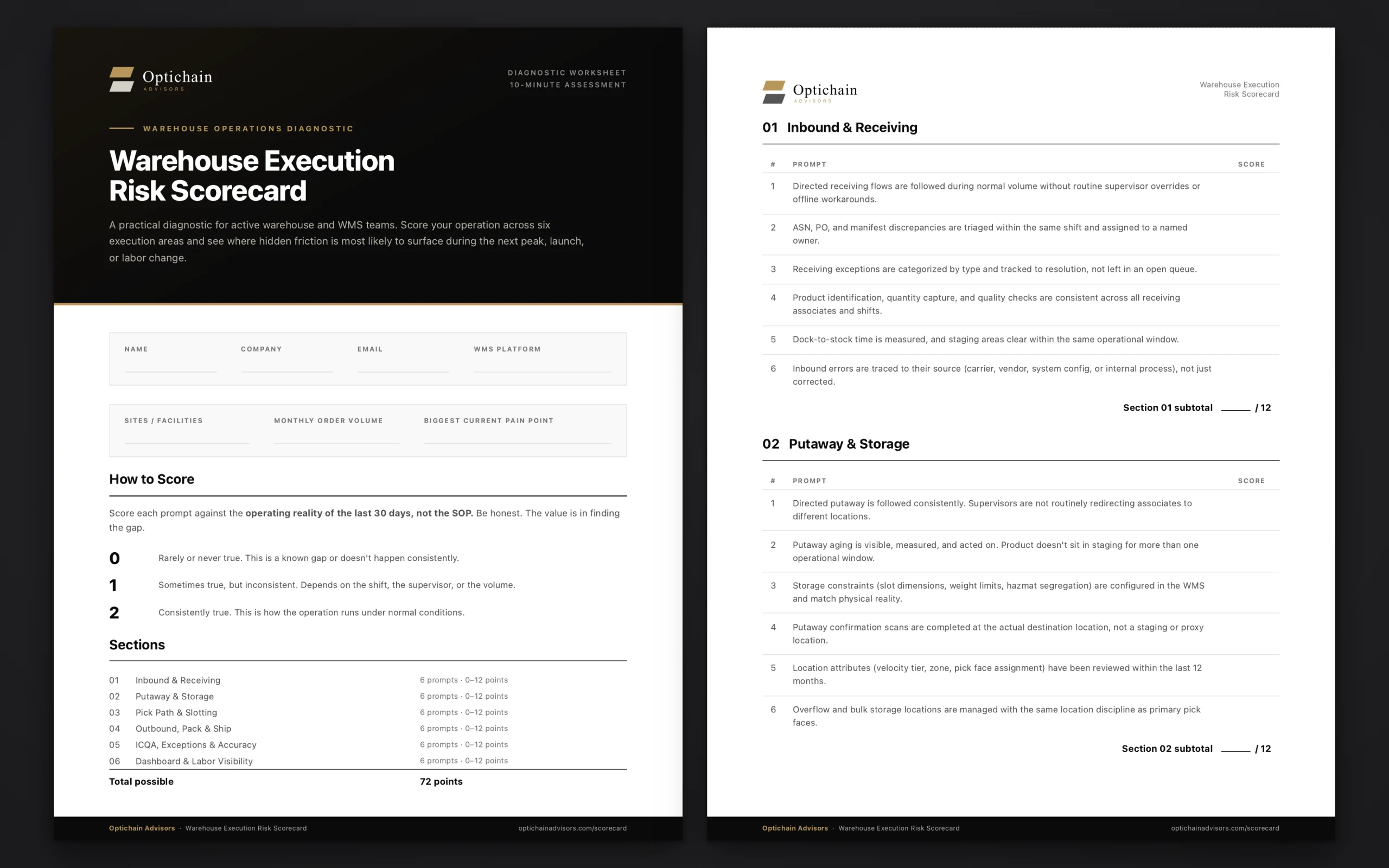
The free Warehouse Execution Scorecard gives your team a practical way to review workflow friction, inventory accuracy, exception ownership, and labor visibility.
Request the free scorecardFor active warehouse teams with a WMS already in place.