
From WCS RFP to completed sorter integration in two months.
Buying the sorter was only the beginning. We led the WCS partner evaluation, worked through the integration with engineering, and prepared operations for the new flow. The job was bigger than choosing a vendor.
Client and WCS-provider details are generalized for confidentiality. The annualized labor-capacity estimate uses 12 roles, 8-hour shifts, 365 operating days, and a fully burdened rate of $28 per hour.
The sorter was the equipment decision. The WCS was the operating decision.
The client was getting ready to deploy a Dematic automated ship sorter and needed a warehouse control system that would work in the real operation. The decision could not come down to a feature checklist. The selected partner had to fit the client's systems, support the floor after go-live, and make sense commercially.
We owned the workstream from WCS requirements and RFP through implementation coordination and operational readiness. Leadership, engineering, and operations worked from the same decision framework and the same path to a live integration.
- Operation
- Automated outbound sortation in a high-volume fulfillment operation
- Business problem
- Select and integrate a WCS while preparing operations for a new sorter flow
- Engagement scope
- WCS requirements, RFP, selection, integration coordination, and operating readiness
- Systems involved
- WCS, automated ship sorter, engineering integrations, and visualization software
- Timeline
- Two months from WCS selection to completed integration
- Evidence basis
- Measured project milestones, operating-model changes, and an annualized labor-capacity estimate
A vendor decision became a working operation.
The WCS selection was only valuable if the sorter could run reliably on the floor. The completed flow gave the team a clear path from parcel induction to outbound sortation, with the operating procedures and support model in place to use it.
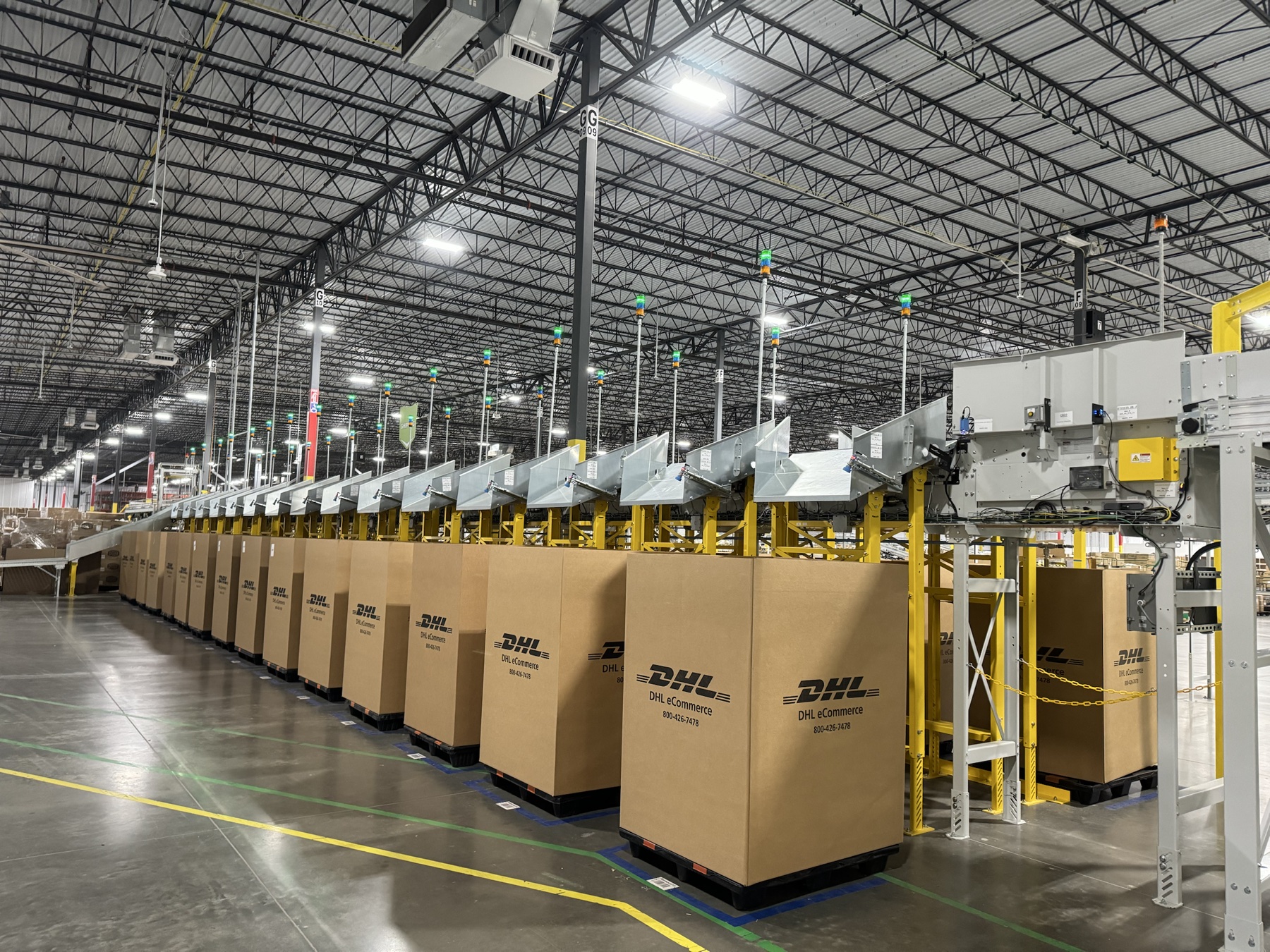
The completed automated ship sorter, staged and ready for the operating team.
A vendor demo does not prove the operating model will work.
The real work starts after the award. The team needed to understand the integration, the implementation workload, the support model, the commercial agreement, and what operators would do when the sorter or visualization software needed attention.
- The WCS had to work with the sorter, the client’s engineering environment, and the warehouse operation. A strong demo was not enough.
- Leadership needed more than a price comparison. They needed a clear view of delivery confidence, support, security, and implementation risk.
- Scope, commercial terms, and the legal framework had to be clear before the selection created expensive ambiguity later.
- The selected WCS still needed a practical integration plan, tested APIs, operating procedures, and a team ready for the new flow.
Turn vendor claims into selection evidence.
We worked with leadership to gather requirements, set the RFP timetable, write the evaluation criteria, and weight them around the client's priorities. Every vendor had to answer to the same operational, technical, commercial, and delivery standards.
Operational and functional fit
Could the WCS handle the required workflows, give operators a usable view, and work with the sorter on the floor?
Implementation confidence
Could the vendor point to comparable customers, explain its delivery approach, and show what the implementation team would actually receive?
Commercial clarity
What would the first year cost, what resources would it require, and what had to be clear in the scope and legal agreement?
Technical and security risk
Would the integration hold up, protect the right data, and give the team a practical support path after the sale?
What are your five largest customers by spend? On average, what ROI do customers report after WCS implementation?
The qualitative questionnaire asked vendors to back up their experience, customer fit, and expected value. It went beyond the usual sales collateral. We assessed the answers alongside the weighted RFP criteria and the project's engineering and operational requirements.
A selection decision leadership could see and defend.
The final comparison was not just a price ranking. Each factor was weighted to the client's priorities, and the pros and cons of every option were recorded alongside the score.
- 01
Total projected first-year cost
Implementation, software, and the resources required to make the operating model work.
- 02
Implementation time
The delivery path, dependencies, and time required to reach a usable operation.
- 03
Risk
Technical, delivery, security, support, and transition risk, not just product capability.
- 04
Commonality with existing systems
How cleanly the WCS could connect to the client’s engineering and warehouse environment.
- 05
Future scalability
Whether the chosen approach could support the operation beyond the initial sorter launch.
The selected WCS needed a runway, not a handoff.
Choosing the vendor closed the RFP. It did not close the project. We stayed with the work through integration coordination and operating readiness so technical confirmation and operator adoption could move together.
Bi-weekly working sessions with the selected WCS partner and development team kept the requirements, API testing, project decisions, and open risks in view until the integration was complete.
Turn the selection into an executable project
Turned the RFP result into a working project proposal with the goals, deliverables, timeline, pricing, and resource plan leadership needed to review.
Specify the integration with engineering
Worked directly with the client’s engineering team to define integration requirements and confirm that the selected WCS could support the required connections.
Test the APIs before relying on them
Ran bi-weekly working sessions with the selected WCS partner and development team. We also tested the APIs before the operation had to rely on them.
Prepare operations to run the new flow
Created operational readiness guides and SOPs, walked teams through the transition, and supported visualization software troubleshooting.

Project artifacts built for the decision room and the floor.
The work produced a connected set of decision, delivery, and operating artifacts. Each one had a job after the RFP closed. It helped the client make the call, keep implementation moving, or run the new system on the floor.
- Requirements package and RFP timetable aligned to leadership, engineering, and operations
- Weighted vendor evaluation framework with qualitative questionnaires and evidence-based scoring
- Decision matrix covering first-year cost, implementation time, risk, current-system fit, scalability, and documented pros and cons
- Scope of work and commercial/legal framework for the selected partner
- Full implementation proposal: summary, background, RFP result, goals, deliverables, timeline, pricing, and resource plan
- Integration requirements, bi-weekly delivery cadence, and API test support
- Operational readiness guides, updated SOPs, transition walkthroughs, and visualization troubleshooting support
A documented decision, a completed integration, and less manual sorting work.
The client selected a WCS partner with a clear record of why it fit the operation and what it would take to get live. The integration was complete two months after the award, and the operating team was ready for the transition.
Two-month integration path
Selection, technical confirmation, and operational readiness stayed connected throughout the project instead of becoming separate handoffs.
12 fewer manual sort roles per day
The new sorter flow reduced the daily manual sorting workload by 12 roles in the operating model.
A decision framework the client owns
The requirements, evaluation evidence, risks, delivery scope, and operating expectations were made clear before the vendor relationship became harder to change.
The $981K figure is an annualized labor-capacity estimate, not a guarantee of realized savings. Actual financial impact depends on shift length, operating calendar, staffing deployment, and the client's labor model.
Where this kind of work lives.
WMS Selection & Requirements Advisory
Vendor-agnostic requirements, RFPs, scorecards, and implementation-risk review before the contract is signed.
Robotics & Automation Integration
WCS and sorter readiness, automation workflows, integration coordination, and operational exception design.
WMS Launch, Migration & Stabilization
SOPs, training readiness, cutover planning, and structured support for the transition to a new operating model.

Preparing a sorter, WCS, or automation integration?
Optichain can turn the vendor decision into an executable plan across requirements, integration readiness, operational transition, and launch support.