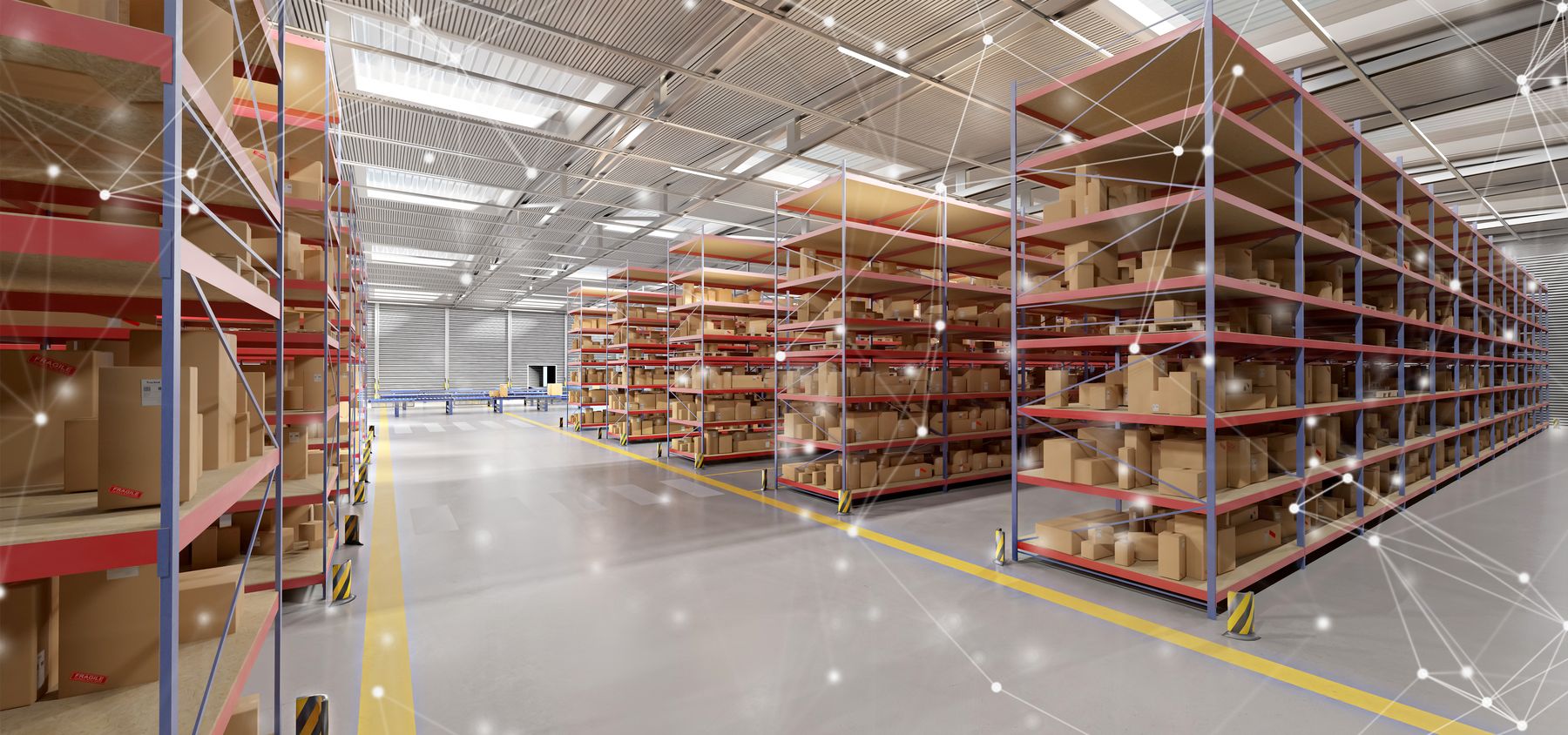
Most warehouse managers know their pick rates. They track them by shift, by associate, by wave. When numbers drop, the instinct is to look at the people: coaching, headcount, and retraining. But in many warehouses, the labor problem is actually a slotting problem wearing a labor disguise.
Travel time is the most direct cost of bad slotting, and it compounds across every pick in every wave. If your high-velocity items are spread across four zones, pickers are covering ground that serves no one. The WMS executes the directed path you gave it. It does not know the path is wrong. It just keeps directing pickers to wherever the product happens to live.
What Slotting Problems Actually Look Like
Slotting friction rarely announces itself. It shows up in proxy metrics that get attributed to other causes:
- High units-per-hour variance between identical shifts. If pick rates swing 20 to 30% without a clear staffing or volume explanation, look at where the product was sitting for each wave.
- Disproportionate replenishment volume. Forward pick locations running dry too quickly usually means fast-movers are undersized for their velocity tier, or demand patterns have shifted since the last slotting review.
- Zone imbalance during waves. If two zones are routinely idle while a third is backed up, the order profile does not match the way product is distributed.
- High travel-per-pick ratio on LPN or carton pick tasks. When pick confirmations require long walks between each scan, you are paying for aisle travel, not warehouse execution.
These symptoms are visible in most WMS platforms if you know where to look. Travel-per-pick can often be calculated from pick task data. Replenishment frequency tells you which locations are mismatched to actual demand. Zone labor allocation by shift shows where the imbalance lives.
How the WMS Executes Directed Putaway, and Why It Matters
Slot assignments are not just a physical decision. They live in the WMS and shape every directed putaway instruction the system generates. When a putaway task fires, the WMS makes a decision based on product attributes: velocity classification, unit dimensions, weight, hazmat flags, and temperature requirements, all cross-referenced against available location attributes.
If velocity classifications are stale, the WMS will direct product to the wrong tier. A SKU that was a C-mover eighteen months ago might be an A-mover today. If the classification was never updated, the system keeps sending it to reserve storage or back-aisle slots. Pickers then travel to retrieve it from locations that were never designed for frequent access.
This is one of the most common sources of invisible travel time waste: a WMS executing perfectly according to outdated rules.
Velocity Classification: The Foundation of Effective Slotting
Good slotting starts with an accurate velocity classification. The typical A/B/C framework covers fast movers, medium movers, and slow movers. It is a starting point, but the cut points matter. There is no universal rule for where A ends and B begins. The right threshold depends on your order profile, SKU count, and forward pick capacity.
A practical approach is to pull 60 to 90 days of pick data and rank SKUs by pick frequency, not just units moved. A SKU that ships in large quantities once a week behaves differently in an operational slot than one that ships in small quantities forty times a week. Both might move the same total units, but the operational demand on the slot is very different.
Once you have velocity tiers defined, map them to physical zones:
- A-movers belong in the golden zone (ergonomic height from knees to shoulders), closest to pack stations or sorter induction points, shortest travel from the start of a pick path.
- B-movers fill secondary zones that are still reasonably accessible but farther from the core pick path.
- C-movers and long-tail SKUs go to reserve or back-aisle locations where pick frequency does not justify prime real estate.
The goal is to reduce the number of steps between the most-touched product and the people touching it.
Slotting and Order Profile Alignment
Velocity-based slotting is necessary but not sufficient on its own. Order profile matters too. If your operation ships a high percentage of single-line orders, pick path optimization looks very different than if most orders contain six to ten lines.
For multi-line order operations, co-location of commonly ordered SKU pairs or families reduces the number of zones a picker must visit per order. This is sometimes called affinity slotting, grouping products that frequently ship together so they can be picked in fewer aisle traversals.
Most WMS platforms will not calculate affinity automatically, but the data is available. A query against your order history can surface which SKU combinations appear most frequently on the same order. If those pairs are currently in opposite zones, moving one reduces travel without touching any WMS configuration at all. Just a physical relocation and a slot update.
What the WMS Needs to Execute the New Slotting Plan
A slotting review without a WMS update plan is just a spreadsheet. Execution requires updating the right master data, and knowing what that data touches downstream.
The key changes typically include:
- Location attributes. Zone assignment, velocity tier, pick sequence, replenishment source, and any capacity constraints need to reflect the new slotting logic before directed putaway can route correctly.
- Item master updates. Velocity classification changes need to propagate to pick strategy logic if your WMS uses item velocity to select pick paths or putaway rules.
- Replenishment triggers. Forward pick min/max levels should be recalibrated when slots move. An A-mover that was undersized in its old location needs a larger min/max in its new one.
- Pick path sequence numbers. If your WMS uses sequence-based pick pathing, the new slot positions need sequence numbers assigned in a way that builds an efficient physical path through the warehouse.
These are configuration changes, not software changes. They should be testable in a non-production environment before rollout, and the cutover should account for product that is in-flight or in staging at the time of the transition.
Seasonal Slotting and Ongoing Maintenance
Slotting decays. The SKU that earned its A-slot two years ago may be a slow mover today. New product introductions push existing items down the velocity curve without a corresponding slot change. Promotions spike short-term demand without triggering any WMS logic.
A practical maintenance cadence depends on how fast your catalog changes. For operations with relatively stable SKU velocity, a quarterly review that checks the top 20% of movers against their current slot tier is usually sufficient to catch the biggest mismatches. For operations with highly seasonal demand or rapid assortment turnover, a pre-peak slotting review, four to six weeks before peak begins, is standard practice.
The goal of ongoing maintenance is not a perfect slot for every item. It is ensuring that your highest-volume operations are not being undermined by slot assignments that made sense under conditions that no longer exist.
Measuring the Impact
Slotting changes are rare among WMS improvements in that they produce measurable results quickly. Travel time per pick, pick rate by zone, and replenishment frequency are all trackable before and after a slotting change. If the data collection is in place, a meaningful improvement is usually visible within two to three weeks of the new slotting going live.
What to track:
- Travel time per pick (if WMS task data allows this calculation)
- Units per hour by zone and by shift
- Replenishment task count per shift for forward pick locations
- Zone labor distribution across waves
- Emergency replenishment frequency
Labor savings from a well-executed slotting improvement typically run 5 to 15% on pick productivity, depending on how far the original slotting had drifted from actual velocity patterns. In high-SKU-count operations with long-standing assignments, the improvement can be larger.
The Operational Reality
Slotting is one of the higher-leverage improvements available to a WMS operation because it is not a technology problem. You do not need new software, a new integration, or a system upgrade. You need accurate data, a clear analysis framework, and the WMS configuration knowledge to translate a slotting decision into directed putaway logic that actually executes.
The operations that delay slotting work tend to do it because the process feels large: hundreds or thousands of SKU decisions, physical moves during live operations, WMS configuration risk. But a prioritized approach that starts with the top velocity movers and the worst mismatches can capture most of the benefit with a fraction of the full effort.
If your pick rates are inconsistent, your replenishment team is constantly busy, and your supervisors cannot explain the variance between identical shifts, there is a reasonable chance the product is in the wrong place. The WMS is executing that mistake at scale, every wave, every day.